Bhutan Organic Project

Grow with Us

The Bhutan Organic Project (BOP) promotes organic cultivation and food in Bhutan by connecting farmers, consumers, and companies.

Established in January 2025 under a JICA-commissioned initiative led by Sun Smile Co., Ltd., BOP works to strengthen low-input organic farming, expand domestic markets, and ensure stable, high-quality production.

Purpose and Background of BOP (Bhutan Organic Project)

The Bhutan Organic Project (BOP) is an organization dedicated to the promotion and establishment of organic cultivation, organic agricultural products, and organic foods within Bhutan.

As part of this mission, this website has been launched as a portal for organic information in Bhutan, operated with the following perspectives in mind:

  •   Farmers’ perspective
  •   Bhutanese consumers’ perspective
  •   Bhutanese companies’ perspective
  •   Trade and market perspective

Management

This site is operated on a voluntary basis with the participation of farmers (both groups and local communities), companies, government agencies, JICA, and Sun Smile Co., Ltd. of Japan. BOP was established in January 2025 as a voluntary association. (For details of the member organizations, please follow this link BOP-Members.com

Background of Establishment

BOP was founded under the framework of a JICA-commissioned project implemented by Sun Smile Co., Ltd. The project, officially titled “Improvement of low-input organic farming techniques and stable sales using Chanachoeng Village as a model case” runs from December 2024 to November 2027 and serves as the foundation of BOP’s activities.

Since 2018, Sun Smile has worked with the aim of exporting Bhutanese organic products to Japan. However, due to various challenges, it became difficult to continue trade. As a solution, we planned to strengthen organic cultivation techniques and expand domestic demand for organic foods in Bhutan, thereby ensuring stable supply—both in quantity and quality—of organic produce, foods, and related products.

When this plan was submitted to JICA as a commissioned project, it was accepted, and the initial activities that later shaped this project began. From the early stages of trade preparation, Sun Smile has received great support from the Bhutanese Royal Family, government officials, companies, and farmers. The members of BOP are mainly drawn from those valuable connections.

Activities

BOP itself does not directly engage in sales or commercial transactions. However, BOP members and other stakeholders are free to conduct both B-to-B and B-to-C transactions. If you are interested, please feel free to contact us.

Future Outlook

Plans for activities beyond December 2027 will be announced through BOP during the course of the project.

Note

As this initiative is operated on a voluntary basis, there may occasionally be shortcomings or delays in communication. We kindly ask for your understanding. With the sincere wish that this site will contribute to achieving 100% Organic Bhutan, we will continue to dedicate our best efforts.

Cultivating Organic Futures

Empowering Farmers and Communities

Sustainability

We promote eco-friendly farming practices that conserve our environment and resources. Together, we can build a sustainable future for Bhutan.

Community

We bring together farmers, businesses, and consumers to create a supportive community around organic practices. Your involvement makes a difference.

Innovation

We embrace new techniques and technologies in organic farming to enhance productivity while maintaining our commitment to health and the environment.

Education

We offer resources and training for organic farming to empower individuals and groups. Knowledge sharing is key to advancing our community's goals.

Connecting through Organic Farming

Meet Our Team

Our dedicated team is here to promote organic farming practices and share the goodness of Bhutan’s natural produce.

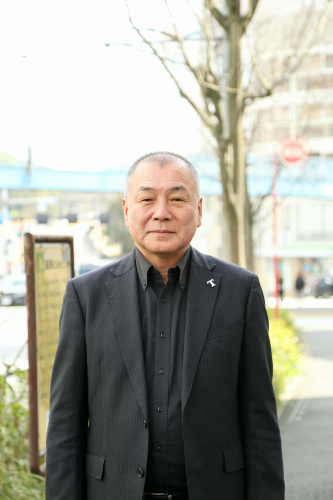
Tomonori Matsuura
Tomonori MatsuuraOverall Leader, Bhutan Organic Project (BOP)
Founder & CEO, Sun Smile Co., Ltd.

Hello, my name is Tomonori Matsuura, and I serve as the overall leader of the Bhutan Organic Project (BOP).
I am Japanese, and for about 30 years I have been managing an organic shop called Sun Smile in Japan.

Through this work, I have been partnering with organic farmers and those practicing fertilizer-free and pesticide-free cultivation, while also operating a distribution business that connects them directly to consumers.

In addition, I manage a medical clinic offering Shiatsu, a traditional Japanese healing art, and I am involved in publishing as well as several NGO activities.

My interest in organic food goes back to my childhood in the 1980s.
At that time, my mother was very weak and often bedridden — one active day would be followed by three days in bed.
She would vomit when eating food grown with chemical pesticides, which made her even weaker.
However, when she began eating organic vegetables and rice, her body responded well, and she gradually regained her strength.

Today, she is still in good health.
This experience inspired a deep conviction within me — “I want to become a farmer and deliver safe and healthy food to as many people as possible.”
With that determination, I entered the Faculty of Agriculture to study under Professor Manabu Katano, who was researching organic and environment-friendly agriculture, including fertilizer-free natural farming.

After graduation, I worked in the organic retail and distribution field, and in November 1997, I founded Sun Smile Co., Ltd.
At the beginning, I had no shop—just a box of organic mandarins that I carried door to door, sharing my wish to spread organic farming in Japan.
Over time, I expanded the business to include vegetable delivery sets, wholesale and distribution services, a Shiatsu clinic, retail shops, a distribution center, a publishing division, and NGO activities.
My connection with Bhutan began in May 2018, when I first visited the country through an Organic Adzuki Bean Project.

During the Great East Japan Earthquake in 2011, His Majesty the King of Bhutan visited Japan and gave a heartfelt speech in the National Diet, which deeply encouraged the Japanese people.
Since learning about Bhutan’s national philosophy of GNH (Gross National Happiness), I had long dreamed of visiting someday—yet I never imagined that I would later have the honor of working together with Bhutanese people in such a meaningful way.

Details of my activities in Bhutan since 2018 are described elsewhere on this website.
Through this project, I sincerely hope to contribute, even in a small way, to Bhutan’s journey toward becoming 100% organic.

I also wish to help share Bhutan’s wisdom, its GNH philosophy, and the beauty of its organic culture with the world—so that more people everywhere may live in true happiness.
Lastly, although I prefer not to emphasize titles, I have listed my main positions and qualifications below as of September 2025 for your reference.

Yukiko Matsuura
Yukiko MatsuuraMarketing Director, Bhutan Organic Project (BOP)
Store Manager, Sun Smile Japan
From my student days, I have been deeply interested in building a healthy body and mind, and I studied rehabilitation to better understand human health.

Since joining Sun Smile, an organic and natural food company founded in 1997, I have been dedicated to promoting truly healthy living through food. Today, I serve as the store manager and as the marketing director for the Bhutan Organic Project.

For over 20 years, I have organized a monthly gathering called “Parenting and Natural Living Circle”—a community space to share wisdom about natural childbirth and child-rearing. I also host seminars on protection from artificial electromagnetic waves, which are becoming increasingly relevant in modern life.

At Sun Smile, our team publishes a free monthly magazine called “Sun Smile News,” where we explore health from many perspectives and share what we learn with our community. When Sun Smile first opened, we faced relentless criticism.

People said that organic farming without pesticides or fertilizers was impossible, and that the vegetables we sold must be fake. At that time in Japan, growing crops without chemicals was considered unthinkable.

But times have changed. Today, countless people in Japan say, “If possible, I want to eat organic.” This shift was born from necessity—because of rising illnesses and allergies caused by pesticides, additives, and the Westernization of diets.

Statistics now show that one in two Japanese people will face cancer or allergies in their lifetime. At our store, we meet many people struggling with such conditions, seeking healing not through medicine, but through food.

From them, I have learned everything. I have witnessed people once given only months to live, who regained years of life through diet. I have seen skin so sensitive that even a touch felt painful—healed and glowing again. And with that healing, I have seen smiles return.

Food has an astonishing power—not only to heal the body, but also to transform the heart. Even those who struggled with depression or emotional pain find peace and joy through organic food grown with love.

The heartfelt dedication of our farmers truly nourishes both body and spirit. This is not theory—it is the truth our customers have shown us.

Bhutan, a nation striving toward 100% organic agriculture, is an inspiration to the world. I will devote all my experience to helping Bhutan build a vibrant, sustainable organic market, where precious farmers’ livelihoods are protected, new generations of growers are inspired, and Bhutan shines as a global leader in organic living—without having to endure the same hardships Japan once faced.

To be honest, I have never studied marketing in an academic sense. Everything I know comes from real-life experience, from being on the ground, face-to-face with people. That is why I am deeply grateful to be part of this JICA grassroots initiative, the Bhutan Organic Project. Through this project, I hope to learn directly from the Bhutanese people—their values, hearts, lifestyles, and needs—and together, create marketing that brings true joy and meaning to everyone involved.
Katsuhiro Terunuma
Katsuhiro TerunumaPresident, T-Farm Co., Ltd.
Chief Cultivation Advisor, BOP

Born in Tokai Village, Ibaraki Prefecture Japan, I have been engaged in the production and sales of sweet potatoes and dried sweet potatoes for over 40 years, inheriting my family’s farming business.

In the 1990s, I expanded the farm to 90 hectares and achieved annual sales of 900 million yen. However, repeated nuclear accidents brought severe reputational damage to agriculture in our region. Through this experience, I began to question deeply what “truly sustainable agriculture, independent of external environments” really means.

As a result, I completely shifted to 100% organic farming—a way of agriculture that coexists in harmony with nature. Without relying on chemical fertilizers or pesticides, I have pursued soil cultivation that maximizes the natural power of microorganisms in the soil, combining scientific data with traditional wisdom.

I also built a dried sweet potato processing plant that meets HACCP standards and established a local organic produce store and an additive-free café that promote resource recycling. Through these efforts, I have been redesigning local agriculture toward a safe, secure, and circular society.

Since 2013, starting with a dried sweet potato project in Tanzania, I have expanded activities to Australia and Singapore, establishing local companies and promoting an agricultural model in which “nature and people coexist in harmony.” In recent years, I founded the Japan SDGs Agriculture Association to advance sustainable agriculture and community development on a global scale.

The philosophy of Bhutan—a nation aspiring to become 100% organic—resonates deeply with my own life’s philosophy. I believe in nature, in people, and in listening to the voice of the land. Drawing upon my experience in Japan and abroad, I wish to learn and grow together with the people of Bhutan, passing on the true richness that comes from harmony with nature to future generations.

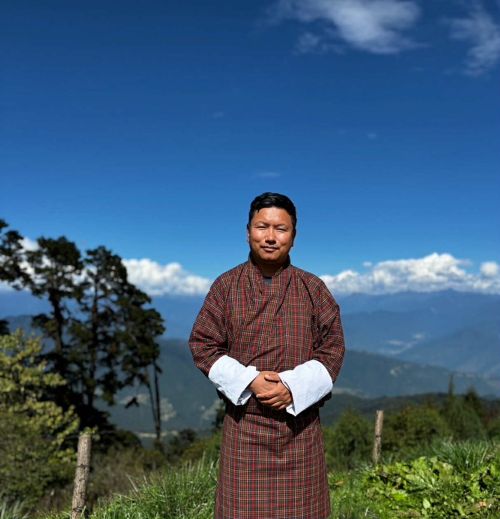
Pema Wangchuk
Pema WangchukDeputy Leader, JICA Organic Project

It has been a great honor and opportunity for me to be part of the JICA Organic Project. My journey into organic farming began in 2017, when I had the privilege to work closely with Mr. Tomonori Matsuura from Sun Smiles Company on the Organic Azuki Bean Project. That experience marked a turning point in my understanding of what truly defines organic agriculture.

Before joining the project, I believed that all crops grown in Bhutan could be considered organic by default. However, through the training I received from the National Organic Programme (NOP), and with the knowledge and guidance from Matsuura-san, I came to realize that without proper certification from the National Centre for Organic Agriculture (NCOA), a product cannot be officially recognized or marketed as organic.

From the Organic Azuki Bean Project to our current initiative—Improvement of Low Input Organic Farming Techniques and Stable Market Access through the Model Case of Chanachen Village—I have observed that Bhutanese organic farmers continue to face numerous challenges, both technically and in terms of marketing. Despite their hard work and dedication to organic practices, many farmers are forced to sell their products at the same price as conventional (inorganic) goods due to the lack of market differentiation and awareness.

As the project’s Deputy Leader and translator, I can confidently say that adopting the techniques shared by Terunuma-san, who brings over 30 years of experience in organic farming, can greatly enhance the quality and productivity of Bhutanese organic produce. On the marketing front, the expertise of Yukiko Matsuura and Tomonori Matsuura—each with over 30 years of experience in organic product sales—can significantly benefit Bhutan’s organic outlets and shops, opening up new and stable market avenues.

In conclusion, I would like to express my heartfelt gratitude to all members of the JICA Organic Project for their unwavering support and commitment. I pledge to continue working hard to ensure the success and sustainability of this important initiative for the future of organic farming in Bhutan.

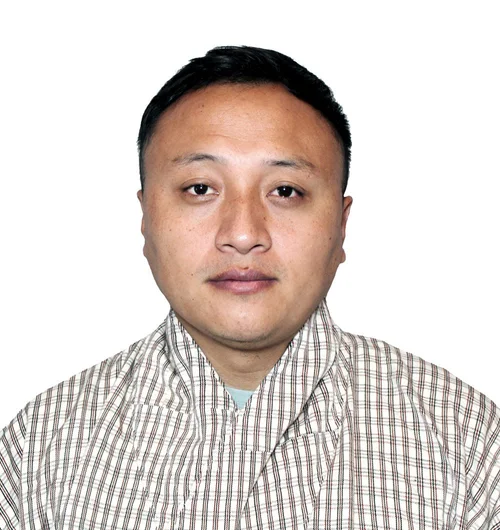
Sonam Chophel
Sonam ChophelCEO, Druksell, Cottage and small Industries,
SC Branding

My name is Sonam Chophel, and I work with DrukSell, where my role brings me into close contact with farmers, producers, and communities across Bhutan who continue to practice organic and traditional agriculture.

Organic farming in Bhutan is not a recent trend—it is rooted in the way our grandparents worked the land, guided by seasons, local knowledge, and respect for nature.
As I travel and engage with farming communities, I am constantly reminded that organic agriculture is as much about patience and care as it is about food production.

Through my work, I have come to understand how deeply farmers depend on healthy soil, clean water, and biodiversity.
Many of them choose to farm without chemical fertilizers or pesticides, even when it is more labor-intensive, because they understand that the long-term health of the land directly affects the well-being of their families and future generations.

Working closely with these farmers has changed the way I view food.
Every grain, vegetable, and product carries a story—of early mornings in the fields, unpredictable weather, and a quiet commitment to farming in harmony with nature.

At DrukSell, we aim to support this commitment by helping farmers add value to their produce and reach markets that appreciate organic and ethically produced goods.
By creating fair and transparent market connections, we hope to make organic farming not only environmentally sustainable, but also economically viable for rural communities.

Bhutan’s vision of sustainability and its philosophy of Gross National Happiness (GNH) provide a meaningful framework for this work.
Organic farming aligns naturally with these principles, as it protects ecosystems while nurturing physical, social, and spiritual well-being.

As Bhutan continues its journey toward strengthening organic agriculture, collaboration and shared responsibility are essential.
Through partnerships, learning, and mutual respect, we can support farmers in preserving traditional knowledge while adapting to modern challenges.

By sharing these reflections, I hope to bring greater awareness to the value of organic farming in Bhutan and beyond.
It is my belief that when we support organic agriculture, we are not only choosing healthier food, but also contributing to a more balanced and compassionate way of living.

DAMC
DAMCExpectations for this project

The expectations of DAMC from the Bhutan Organic Project are as follows:
  1. Increase income of the farmers of Chanachen village by 30% from the current situation

  2. Improve the highway Organic Outlet at Chanachen-junction upto the standard with proper Organic signage and toilet facilities. Make it worthy for tourists to stopover.

  3. Improve visibility of Organic Outlet at Kaja Throm and help to sustain it

  4. Train farmers of Chanachen and officials of NCOA on low-input Organic Farming techniques and also conduct exposure trips in the region or in Japan for on-field learning.

  5. Promote value-addition of organic products

  6. Establish market linkages to export Organic products from Bhutan to Japan and other countries

  7. Promote online sales of Organic products

Ugyen
UgyenCEO, Bio Bhutan Private Limited
Hello, I’m Ugyen, the Chief Executive Officer of Bio Bhutan, a pioneering purpose-driven social enterprise dedicated to promoting sustainable and organic livelihoods across Bhutan. My journey has been deeply rooted in the belief that responsible business can uplift rural communities while protecting the environment we all depend on.

At Bio Bhutan, we work directly with diverse community-based groups including community forest management groups, women’s groups, medicinal plants groups, cooperatives and small- scale producers in some of Bhutan’s most remote and hilly areas.

With our vision to create a brand that exemplifies ethical and sustainable business delivering value to farmers, consumers and safeguarding nature; the company creates income-earning opportunities, promote fair and equitable benefit sharing, and support sustainable use of Bhutan’s rich biodiversity.

In 2005, Bio Bhutan became the first company in the country to obtain organic certification, marking a milestone in Bhutan’s organic movement. We are also proud to be the first private enterprise in the country to operationalize Bhutan’s Access and Benefit Sharing (ABS) system, ensuring that local communities directly benefit from the sustainable use of natural resources.

To deepen our social and environmental impact, Bio Bhutan now operates Bhutan’s first organic certified product sales outlet, which provides a dedicated market for certified organic products. This initiative provides farmers with premium market access, reduces post-harvest losses, and encourages sustainable production practices, while offering consumers authentic, traceable organic products that support people and the planet.

The dedicated Organic Sales Outlet not only addresses the key challenges faced by rural organic producers, such as limited market access and unreliable incomes, but also helps promote organic farming and safeguard natural ecosystems for future generations. By supporting organic certification, value addition, and product diversification, we bridge the gap between remote producers and high-value local and international markets.

Our product portfolio reflects Bhutan’s pristine environment and rich natural heritage, offering certified organic vegetables, cereals, grains, herbal teas, spices, range of essential oils and other organic products that appeal to both domestic and international health-conscious consumers.

As CEO, I remain deeply committed to advancing sustainable business practices, promoting healthy living, and empowering rural communities. Together with our partners and consumers, we aim to build a future where organic and ethical living becomes a way of life, ensuring that both people and the planet thrive in harmony.

Kadrenche!
Pema Lhaden
Pema LhadenAgriculture Extension Officer
Pema Lhaden is the Senior Agriculture Extension Supervisor in Gelling Gewog, Chhukha Dzongkhag. She leads grassroots farming programs promoting organic agriculture, sustainability, and food security. Passionate about rural innovation, she spearheads the Chanachen Model Organic Village and the Sun Smile Project to empower farmers and strengthen Bhutan’s organic movement.
Kunzang Tshering
Kunzang TsheringGeneral Manager
Bhutan Agro Industries Limited (BAIL)
With a Master’s degree in Agriculture Interdiscipline, I bring over 24 years of extensive experience in the agricultural sector. I have spent 21 years serving the Ministry of Agriculture, where I held technical and managerial roles at the district level, overseeing programs and initiatives that supported local farming communities. Following this, I gained three years of experience in the corporate sector, working at the management level in close collaboration with farmers to implement practical solutions and strengthen agricultural operations. This blend of public and private sector experience has equipped me with a strong understanding of agricultural management, farmer engagement, and sustainable practices.
Ugyen
UgyenBhutan Organic Sales Outlet Operator
CEO, Bio Bhutan Private Limited
Hello, I’m Ugyen, the Chief Executive Officer of Bio Bhutan, a pioneering purpose-driven social enterprise dedicated to promoting sustainable and organic livelihoods across Bhutan. My journey has been deeply rooted in the belief that responsible business can uplift rural communities while protecting the environment we all depend on.

At Bio Bhutan, we work directly with diverse community-based groups including community forest management groups, women’s groups, medicinal plants groups, cooperatives and small- scale producers in some of Bhutan’s most remote and hilly areas.

With our vision to create a brand that exemplifies ethical and sustainable business delivering value to farmers, consumers and safeguarding nature; the company creates income-earning opportunities, promote fair and equitable benefit sharing, and support sustainable use of Bhutan’s rich biodiversity.

In 2005, Bio Bhutan became the first company in the country to obtain organic certification, marking a milestone in Bhutan’s organic movement. We are also proud to be the first private enterprise in the country to operationalize Bhutan’s Access and Benefit Sharing (ABS) system, ensuring that local communities directly benefit from the sustainable use of natural resources. To deepen our social and environmental impact, Bio Bhutan now operates Bhutan’s first organic certified product sales outlet, which provides a dedicated market for certified organic products. This initiative provides farmers with premium market access, reduces post-harvest losses, and encourages sustainable production practices, while offering consumers authentic, traceable organic products that support people and the planet.

The dedicated Organic Sales Outlet not only addresses the key challenges faced by rural organic producers, such as limited market access and unreliable incomes, but also helps promote organic farming and safeguard natural ecosystems for future generations. By supporting organic certification, value addition, and product diversification, we bridge the gap between remote producers and high-value local and international markets.

Our product portfolio reflects Bhutan’s pristine environment and rich natural heritage, offering certified organic vegetables, cereals, grains, herbal teas, spices, range of essential oils and other organic products that appeal to both domestic and international health-conscious consumers.

As CEO, I remain deeply committed to advancing sustainable business practices, promoting healthy living, and empowering rural communities. Together with our partners and consumers, we aim to build a future where organic and ethical living becomes a way of life, ensuring that both people and the planet thrive in harmony.

Kadrenche!

Join the Movement for Organic Farming

Be part of a growing community dedicated to sustainable farming. Support local farmers, attend our events, or explore volunteering opportunities. Every contribution makes a difference.