The world’s cropland covers roughly 1.38 billion hectares (about 3.41 billion acres). Of that,
around 20 million hectares (about 49 million acres) are farmed organically — approximately
1.4 percent.
If we look instead at total agricultural land, which includes pasture, the world has about 4.7 billion
hectares, of which 98.9 million hectares (2.1 percent) are organic.
Bhutan has about 100,000 hectares of cropland (some 250,000 acres). Of that, around 3,700
hectares (about 9,000 acres, 2023) are under organic cultivation — roughly 4 percent.
In Bhutan’s case, I imagine there are many farmers growing without pesticides or chemical
fertilizers who simply hold no certification. Even so, the certified figure is surprisingly small,
isn’t it?
For reference, Japan has about 4.3 million hectares of cropland (roughly 10.6 million acres).
Of that, some 30,000 hectares (about 74,000 acres, as of March 2024) are farmed
organically — just 0.7 percent. It is very much a field still waiting to grow.
Sources: cropland area — FAO; organic area — FiBL & IFOAM, The World of Organic Agriculture; figures
for Japan — Ministry of Agriculture, Forestry and Fisheries.
In Japan, herbicides came into widespread use in the 1960s, freeing farmers from the labor
of weeding. But groundwater contamination, soil degradation, soil erosion, and a rise in
cracked and broken grains — rice that shatters when milled — have prompted a national shift
toward reducing agrochemicals. And people are beginning to rediscover something else as
well: the value of pulling a single weed by hand, and of living alongside the weeds rather than
removing every last one.
I have also begun working in the Philippines. Around 18 million people there live below the
poverty line — and yet the capital has its organic shops. Almost everything sold in them is
imported rather than Philippine-grown. Could the country not supply more of its own
organic food from its own land? I came away feeling a little sad.
Why the Philippines? Because I believe that spreading Natural Cultivation — a way of
growing that uses no fertilizer of any kind, including organic fertilizer, and no agrochemicals
— together with the produce it yields, can help ease poverty and improve the health of thepeople who eat that food. It is the method I promote, and the produce I sell.
There is a question I am asked often. If organic farming spreads across the world, if it
spreads across Bhutan, what becomes of a country’s food security? Can it still produce, by
weight, enough food to feed its people?
Bhutan’s food self-sufficiency is already low, so I would not frame my answer as a promise
that organic farming will safeguard food security. What I would say is this:
Organic farming would not be a cause of any further decline in self-sufficiency.
As an agriculture student, I carried out a great many soil analyses for my thesis work. What I
found was that most farms already hold several hundred to several thousand years’ worth of
nutrients in their soil. Other scientists have since written much the same thing.
The difficulty, though, is this: those nutrients are not necessarily present in a chemical form
that plants are able to take up.
Take phosphorus (P). Soil contains both available and unavailable phosphate. Available
phosphate is in a form plants absorb easily. Unavailable phosphate — especially in clay soils,
where the clay binds the phosphorus — is almost entirely out of a plant’s reach.
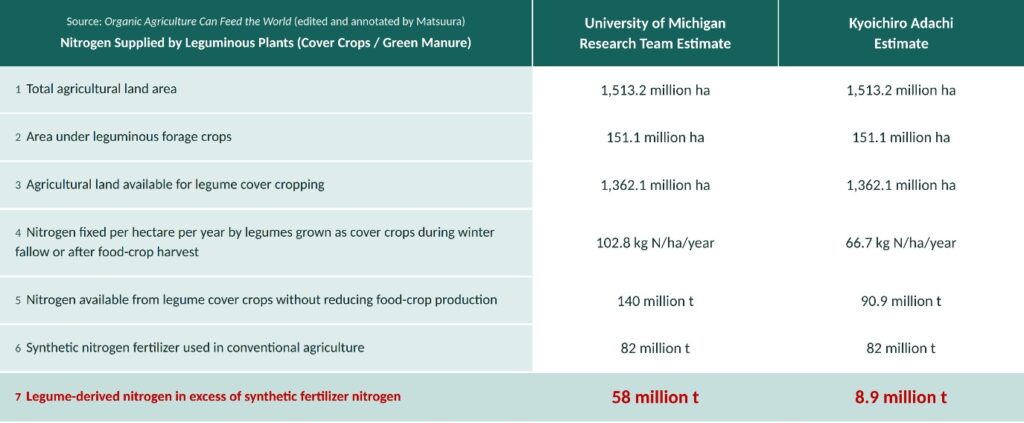
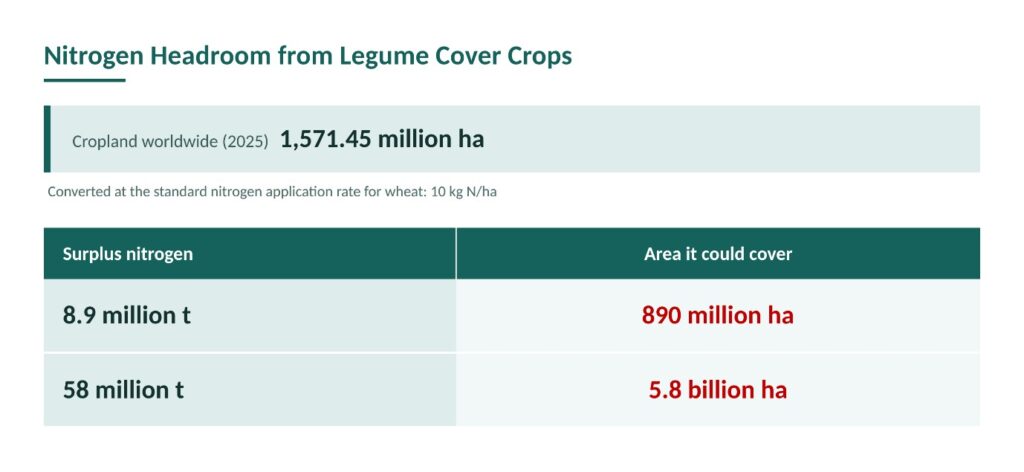
So how do we make it easier for roots to absorb?
Approached through soil chemistry, pH has the greatest influence. But without the right
materials there is often little one can do about it. And pH raises a more fundamental
question — whether the crop is suited to that soil in the first place. Force the issue and you
end up leaning on chemical fertilizers, and that has no lasting future.
There is another route, though: improving the soil’s physical properties. In fact, I believe this
is the greater of the two.
It means building soil that does not obstruct root growth, and that does not obstruct the
microorganisms living within it — particularly aerobic bacteria, the ones that thrive on air
and oxygen.
Put simply, we aim for soil that is warm, soft, good at holding water, and good at draining it.
All four at once. And the way there is soil with a crumb (aggregate) structure.
Crumb structure is when soil particles gather into small clusters, and the gaps between those
clusters become passageways for air and water. Do look it up if you would like to know more!
Once soil develops that crumb structure — warm, soft, water-holding, well-draining — and
once there is a reasonable amount of carbon (C) present, the aerobic bacteria begin to
stabilize.
Research into mycorrhizal fungi has been advancing rapidly of late. They, too, are aerobic.
A mycorrhizal fungus is, put simply, a courier. It enters the plant’s roots and receives the
sugars and other nutrients the plant has made through photosynthesis. In return, it draws
from the soil whatever nutrients the plant needs at that moment and delivers them.
To extract those nutrients, the fungus enlists the help of other microbes. Here too there is an
exchange: it gives those microbes the nutrients they need, and receives in return the
nutrients it needs — which is to say, the nutrients the plant needs.
It is hard to believe, but a mycorrhizal fungus can extend as much as 20 meters of hyphae
through a single cubic centimeter of soil.
The relationship between plants, mycorrhizal fungi, and other microbes — I have high hopes
for where this research leads.
Which brings us to the next question: how do we help these fungi settle and stabilize?
First and foremost, the soil itself, as described above. And then creating the conditions for
the fungi to build their networks underground. Mycorrhizal fungi cannot survive without
plant roots. That, it seems, is where the clue lies. Beyond that, I am looking to future trials to
tell us more — we will be starting our own experiments at the Sun Smile Farm.
One more thing: matching the right crop to the right land, and carrying out each task at the
right time. These are the most basic principles of all, and also the most important.To return to the question —
Whether in Bhutan, in Japan, or anywhere in the world: if organic farming spreads, will
there be less food for people to eat? Will it lead to hunger?
The soil holds great gifts from the natural world.
It is only that human understanding has not yet caught up with nature. That we might draw
closer to nature, and seek a meeting point between modern science and the spiritual — I feel
that this pursuit is itself a message from nature.
Nature is magnificent. In gratitude for the life given to us by the universe, by this earth, by
the natural world, I hope that today and in all the days ahead, more and more people will
find reason to smile.
A closing thought
In Japan we often speak of tsuchi-zukuri — “making soil.” But I have come to feel that the
phrase is a little presumptuous.
Human beings cannot make soil. True soil forms through nature’s own work, at a rate of only
a few centimeters per century. Even with all of modern science, we cannot manufacture it.
So what we can do is not to make soil, but to be allowed to help. And in being allowed to
help, we ourselves are given life. That is how I have come to see it.
Sun Smile
Bhutan Organic Project Manager