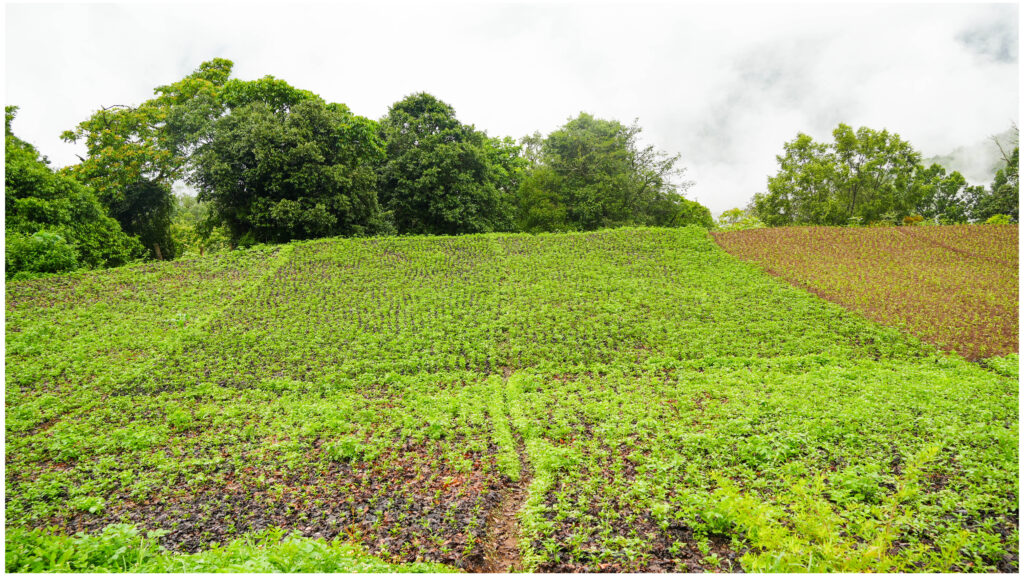
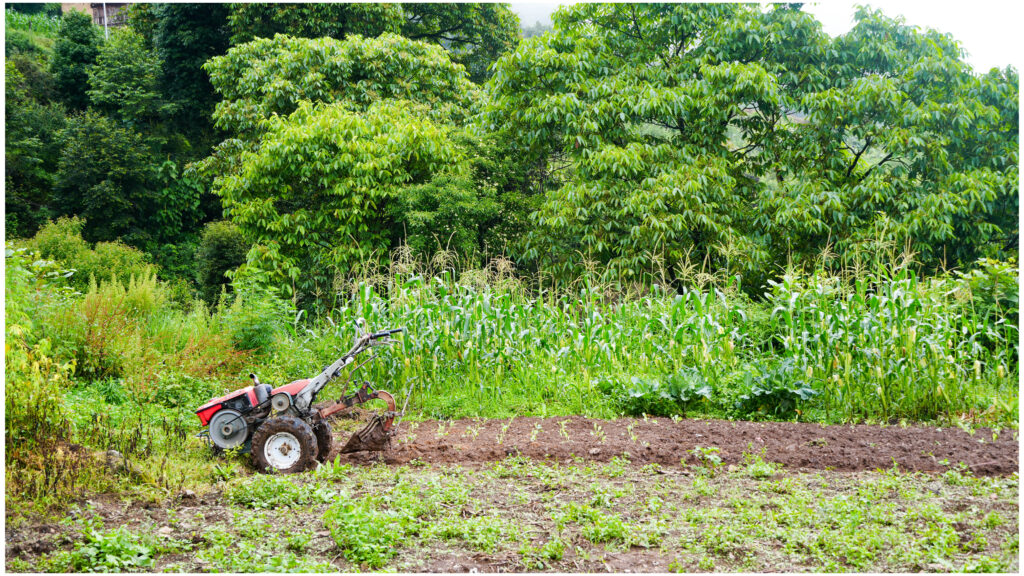
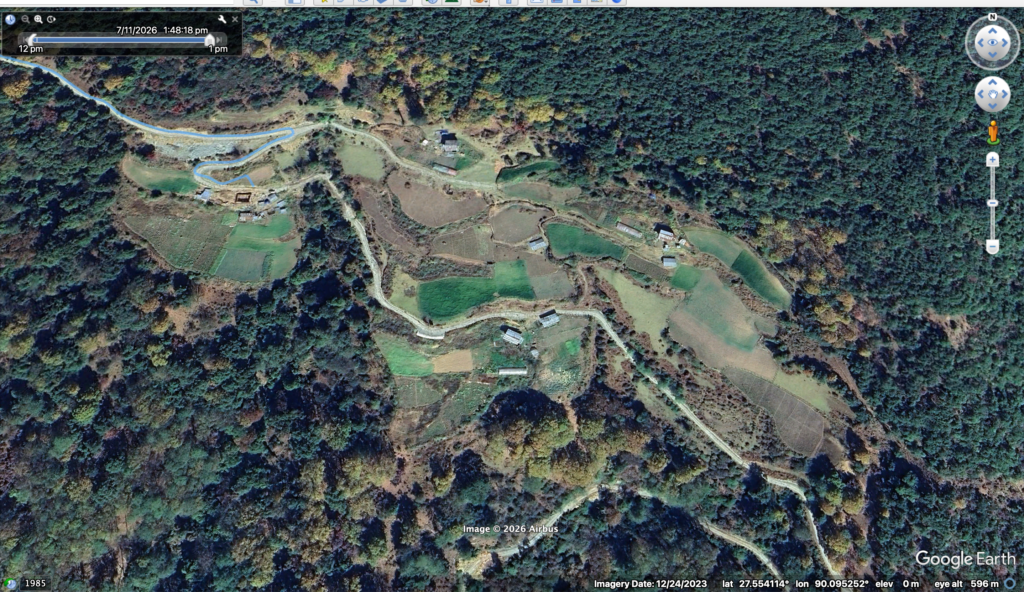
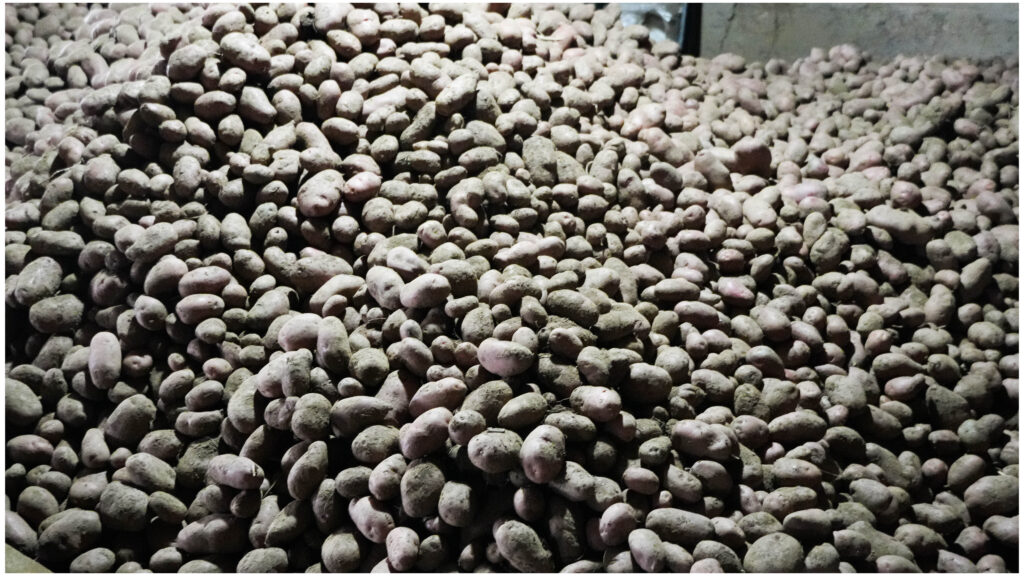
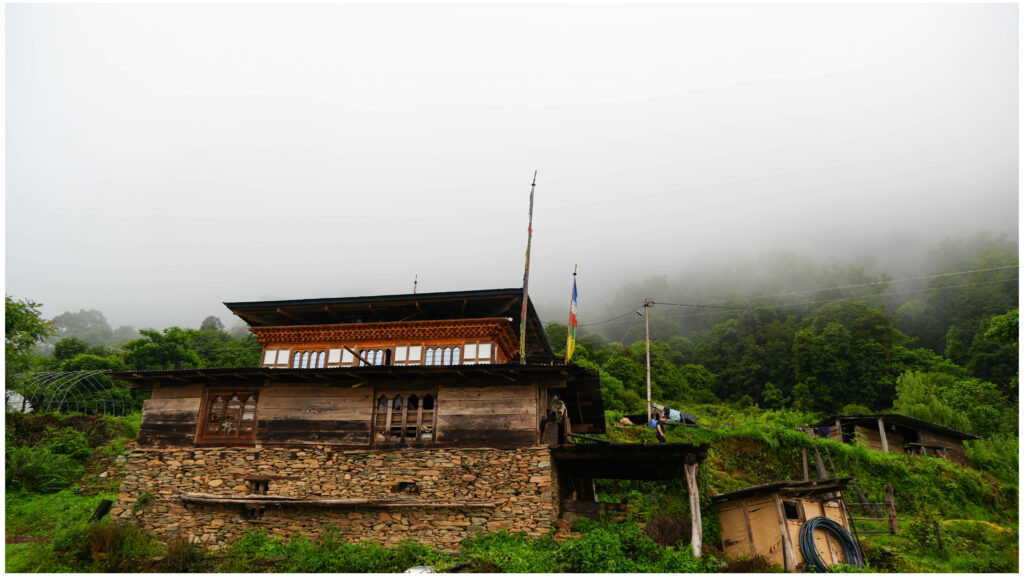
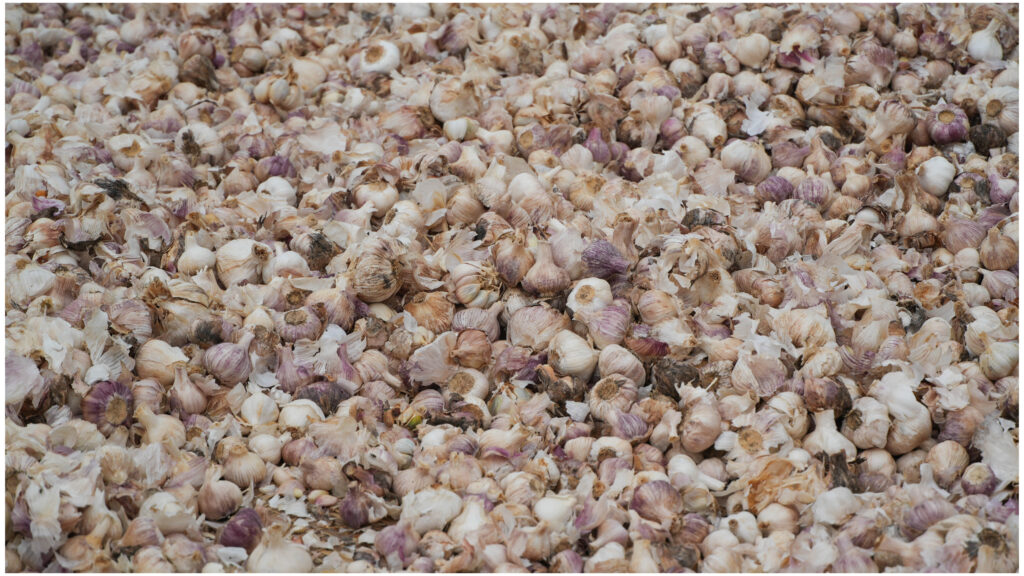
On 10th and 11th July 2026, I had the opportunity to visit Lull Model Organic Village in Kazhi Gewog under Wangdue Phodrang Dzongkhag. The village has only five households, and all of them grow organic potatoes, garlic and other vegetables.
Lull is located at an elevation of about 2,500 metres above sea level and is a little over 25 kilometres from Chuzomsa, the highway junction. Although the distance is not very far, reaching the village was not easy.
It was my first visit to Lull. Because of the continuous rain, the farm road was very slippery. It took us almost two hours to reach the village from the highway. At one point, our four-wheel-drive Toyota Hilux slipped into the roadside drainage, and we had to push it out before we could continue. There was also logging work on the farm road, which delayed our journey further. By the time we reached Lull, it was already getting dark. Thankfully, Mr. Norbu and his family welcomed us warmly and made us feel at home.
Being the peak of summer, there were plenty of flies, and their bites reminded us that life in the village is very different from what most of us are used to. It also rained throughout the night.
This visit made me realise that organic farming is not an easy choice. The farmers work hard every day, but they also have to deal with difficult roads, long distances and limited transport. Villages like Lull are located far from the main roads, making it difficult to move produce to markets or bring in whatever little they need. Building an efficient logistics system for such remote organic villages is a challenge for the government as well.
What impressed me the most was the commitment of the farmers. Just across the river, farmers in neighbouring villages use fertilisers like Sufala and urea to improve soil fertility. But the farmers of Lull continue to rely only on organic methods.
Sometimes we talk about organic farming without really understanding what it takes. After spending time in Lull, I realised that the purest form of organic agriculture can only be found in places like this, where farmers continue their work with honesty and dedication despite many difficulties.
If we want to understand organic farming properly, we need to visit these villages, walk through the fields, listen to the farmers and see their daily lives for ourselves. Reports and meetings alone cannot tell the full story.
For me, this was a chance to see both the hardships and the beauty of organic farming. I returned home with great respect for the farmers of Lull, and the experience has encouraged me to keep working to connect with and support more organic farmers across Bhutan.
P.S. Lull village was certified Organic through Local Organic Assurance System (LOAS) on 8th May 2025.
Written by:
Chief Marketing Officer
Department of Agricultural Marketing and Cooperatives (DAMC)