This was my very first visit to Bhutan.
In Japan, Bhutan is often described as “the happiest country.”
Some people even come here with the quiet hope that simply being in Bhutan will somehow make them happy.
I came to Bhutan as the marketing lead for the JICA-supported Bhutan Organic Project.
As I stepped off the plane, full of curiosity about life in this “happy country,” I took a deep breath of fresh air.
In that very moment, I felt something—“this feels good.”
It was clearly different from my home country, Japan.
I hadn’t even entered the town yet, but my heart was already full—to the point where I was moved to tears.
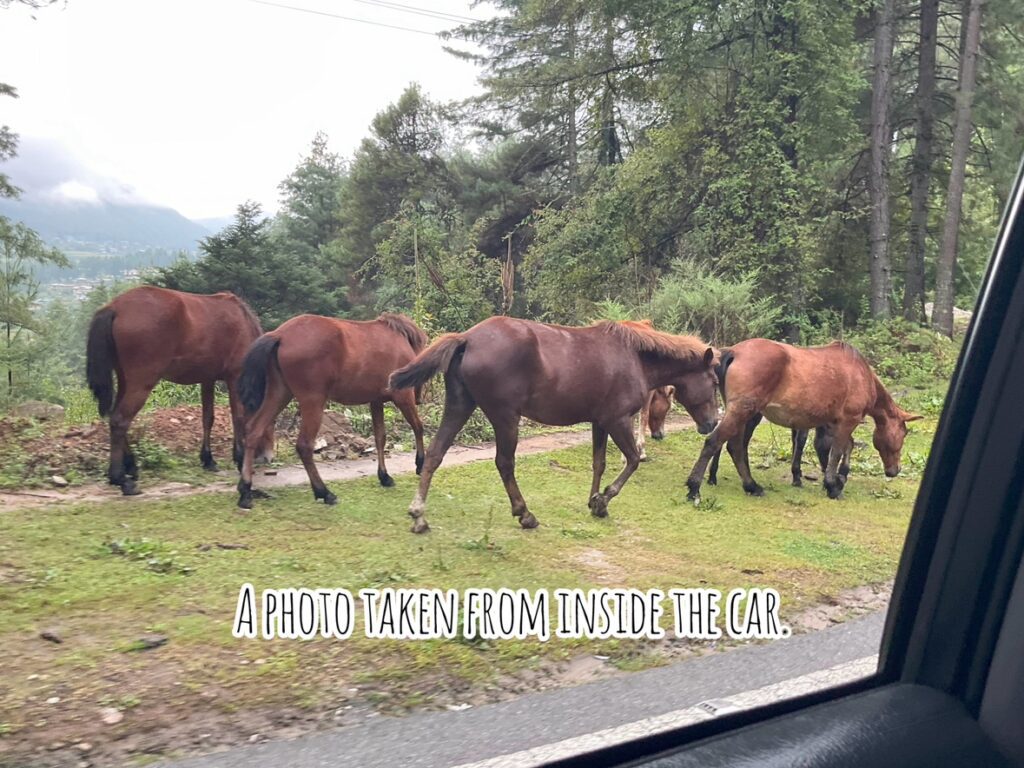
I still don’t fully understand what that emotion was, but it was real.During my short stay of about two weeks, I came to feel strongly that Bhutan is not just a country where people are happy. It is a place where all living beings are allowed to exist in harmony and peace. Cars pass by, people walk with smartphones in their hands, and among them, cows, horses, and dogs move freely in the same spaces.Animals are not fenced in.
Instead, houses and hotels are enclosed—humans are the ones inside.
In Japan, this would be unthinkable.
We tend to place humans above animals and confine them. It is not equal.
There are no flower shops.
Because plants are also living beings.
There is a quiet respect here—not to take away life unnecessarily.
This is Bhutan.
A country living in harmony with nature.
And I felt that this is why it is called “the happiest country.”
Living with Nature
I strongly believe that our project has deep meaning in this context.
The way our food is grown must be kind to all living beings.
If we rely too heavily on pesticides and fertilizers,
it will negatively affect soil microorganisms, insects, plants, animals—and ultimately, humans.
Such a system is simply unsustainable.
GNH and Organic Agriculture
Among the four pillars of GNH, our project is especially connected to:
• Promotion of sustainable development
• Conservation of the natural environment
However, the success of this project depends greatly on something even more important—
the spirit of compassion that Bhutanese people already carry.
To love others.
To care for animals, plants, and nature as a whole.
When we love the soil, everything begins to thrive.
Organic farming is one way of expressing that love.
“Animal Waste Doesn’t Smell”
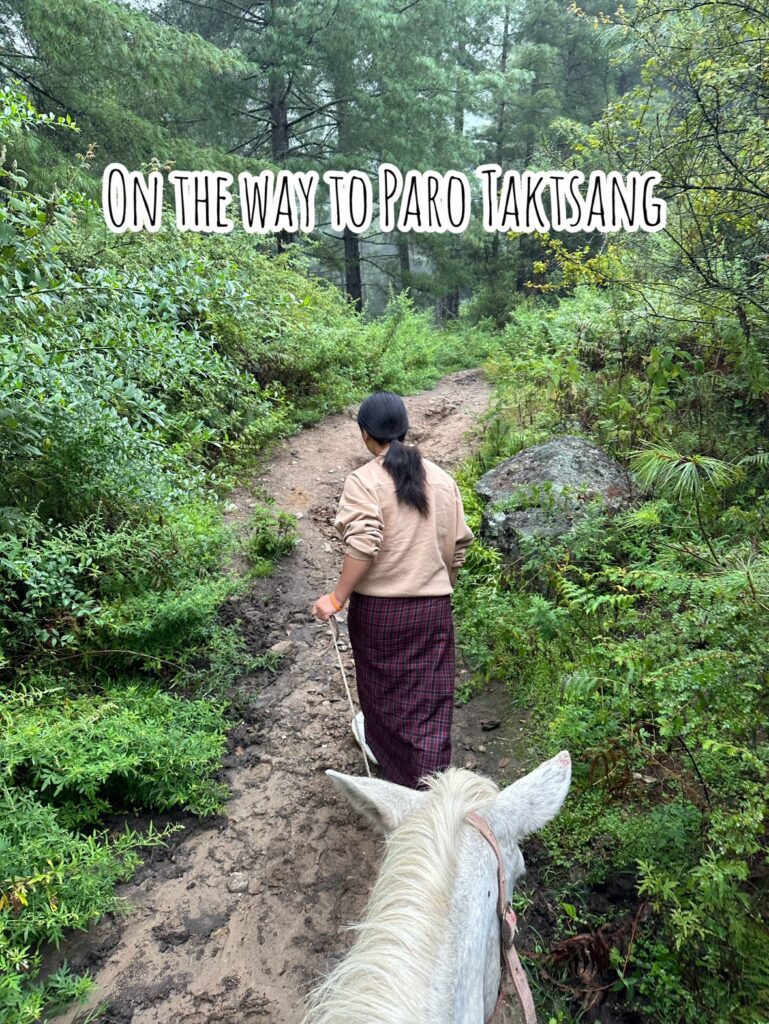
On my very first day, I climbed to Paro Taktsang.
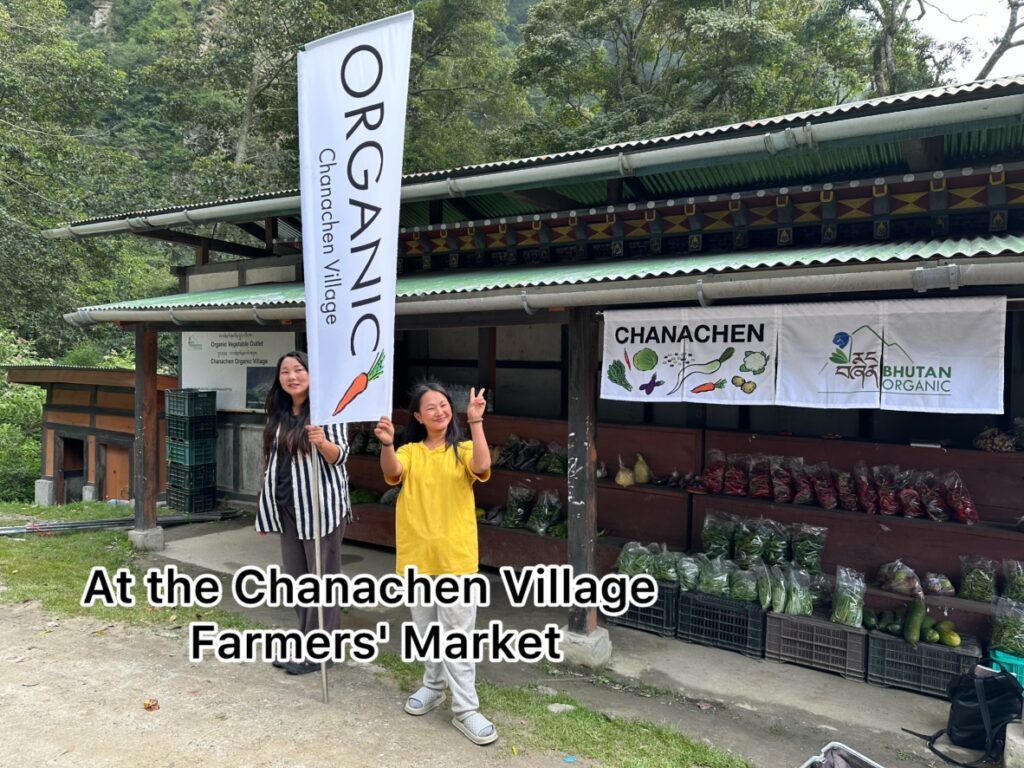
During the project, I also visited places like Chanachen, Thimphu, Kaja Throm, and Chhukha.
Everywhere—mountains, towns, and villages—there was animal dung.
But something surprised me.
It didn’t smell.
There were no flies gathering around it.
It wasn’t unpleasant at all.
Even after returning to Japan, when I was unpacking my luggage,
I found that some dung clinging to the bottom of my shoes.
Still—no smell.
I looked at it closely.
It was dry, with visible undigested fibers.
If this had happened in Japan,
the moment I opened my suitcase, the smell would have filled the room.
I know this from experience.
In Japan, animal waste usually smells strongly and attracts flies.
The difference, I believe, is clearly in what the animals eat—
and also how they live.
In Bhutan, animals move freely and eat natural foods, untouched by chemicals.
In Japan, some animals rely on processed ped provided by humans.
What Comes Out Reflects What Goes In
At the organic shop where I work, I sometimes give health consultations.
I often say:
“Your body tells you what kind of food you are eating—just look at your stool.”
What comes out is the result of what went in.
It shows whether the food is supporting your health or burdening your body.
By that measure, Bhutan’s animals must be very healthy.
And their waste returns to the soil.
A beautiful, sustainable cycle.
What I Felt in Bhutan
I strongly felt that this cycle—carefully preserved by the people of Bhutan—must be protected.
Perhaps it is because Bhutan shows us something that my own country has lost.
That feeling I had when I first arrived at the airport…
maybe it was because I instinctively recognized something I have been searching for over the past 30 year journey of running an organic shop.
A form of happiness that I have always believed in—was already here.
We in Japan have already experienced the consequences of excessive use of pesticides and fertilizers.
That is exactly why we want to contribute.
A Message to Bhutan
Please continue to show the world this beautiful example of the happiness that organic living can bring.
Bhutan is now at an important turning point.
Social media and modern information are rapidly entering daily life.
I sincerely hope that Bhutan can continue this way of living—
a life where even animal waste does not smell—
while balancing both the digital world and the real world.
It is truly an honor for us to support you in any way we can.
We hope that Bhutan can continve this way of living.
With deepest gratitude.Thank you very much.
